
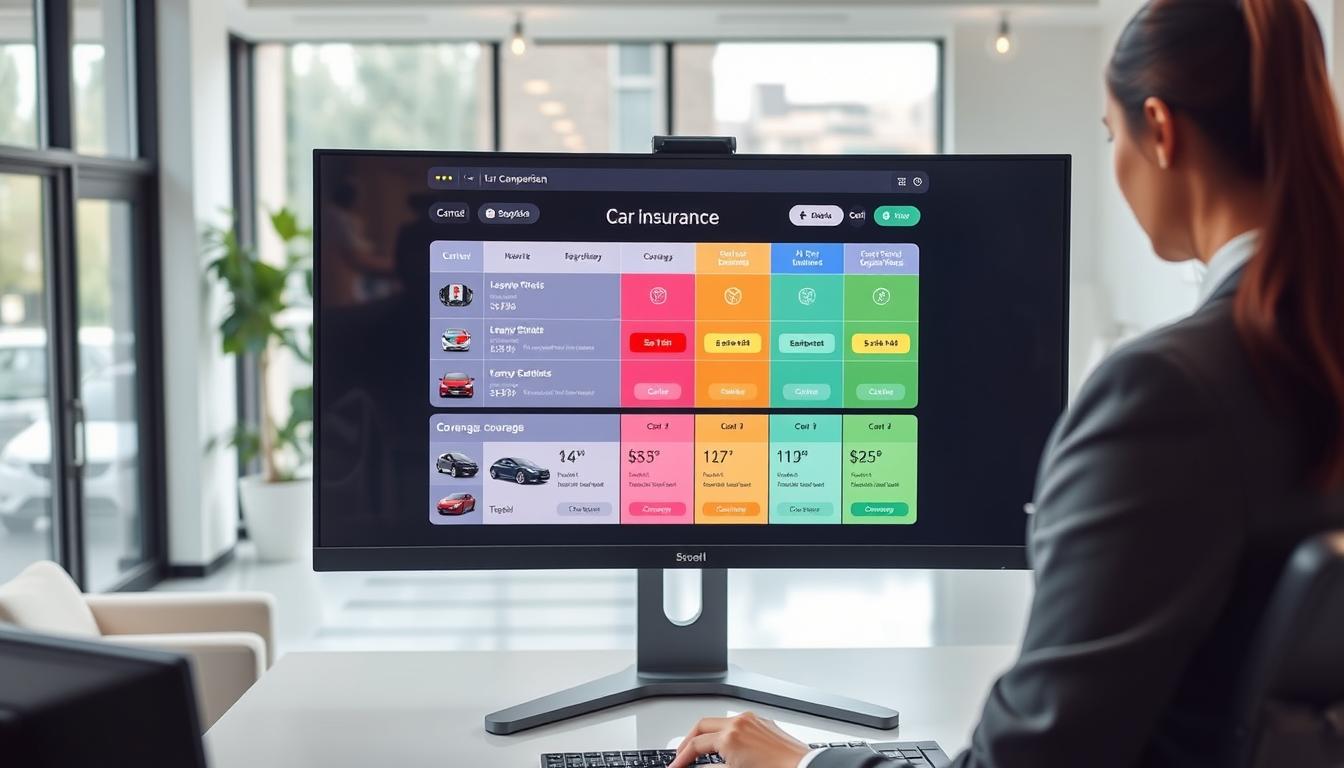
Driving through the maze of car insurance can be stressful. Unexpected bills can make your heart race. You worry if you're really covered on the road.
Coverage Professor shines a light in this confusing world. It's a platform that connects you with many insurance providers. This makes finding the right car insurance easier.
It's important to understand how these sites work. They don't offer insurance themselves but help you compare options. They aim to give you the knowledge to make smart choices.
This guide is for everyone, whether you're new to driving or want to improve your policy. You'll learn about the best insurance options and how to save money. You'll discover how to use comparison sites and find the right coverage for your car and budget.
It's time to understand car insurance better. Take charge of your insurance needs. Your journey to better, cheaper auto insurance begins here.
{tocify} $title={Table of Contents}
Understanding Coverage Professor Car Insurance
Shopping for car insurance can be tough. Coverage Professor makes it easier by helping you find the right coverage for your car. Their platform guides you through the complex world of auto insurance.

Coverage Professor is unique in the car insurance market. It offers a detailed comparison tool. This tool matches your needs with the best insurance options.
What Coverage Professor Delivers
The platform offers services that make it stand out:
- Instant online quote comparisons from multiple insurers
- Personalized insurance recommendations
- Transparent pricing details
- Detailed coverage analysis
Navigating the Quote Comparison Process
Starting with Coverage Professor is easy. Here's what you do:
- Enter your vehicle and personal information
- Select desired coverage levels
- Review personalized insurance quotes
- Choose the best policy for your needs
Coverage Professor uses advanced algorithms. It finds insurance providers that fit your driving profile, budget, and needs.
Why Comparing Auto Insurance Quotes Saves You Money
Dealing with car insurance can seem like a big puzzle. Insurance companies look at many things when setting your rates. This includes your age, where you live, your credit score, what car you drive, how much you drive, and if you've had any claims.
Not all companies weigh these factors the same way. Some focus on drivers who are considered high-risk. They offer good rates for those drivers. Others look for drivers with clean records and charge more for them.
- Obtain 3-5 quotes from different insurers
- Compare coverage details, not just prices
- Understand how your personal risk profile impacts rates
- Use online comparison platforms to simplify research
It's not just about finding the cheapest policy. It's about finding the best rate for your specific situation. Experts say to get at least three to five quotes. This way, you can find the best deal for you.
Online platforms can help you get quotes easily. Just enter your info once and get quotes from several companies. But, always check the quotes are right and know what you're getting before you decide.
Essential Coverage Types Every Driver Should Consider
Auto insurance can be tough to understand. Knowing the right coverage is key to financial safety and peace of mind. Let's explore the essential insurance types every driver needs.
Understanding Liability Coverage Requirements
Liability coverage is your financial safety net in case of an accident. State minimums for per-person bodily injury limits and per-accident bodily injury limits can be surprisingly low. Most states require a basic 25/50/25 coverage, which means:
- $25,000 per-person bodily injury limits
- $50,000 per-accident bodily injury limits
- $25,000 for property damage limits
These minimum limits often fall short in serious accidents. You could be personally liable for damages exceeding your policy limits. Experts recommend higher liability coverage, which is important if you have significant assets to protect.
Protecting Your Assets with Advanced Coverage
Consider an umbrella policy for extra liability protection beyond your auto insurance. This extra layer of coverage can protect your personal wealth from lawsuits resulting from accidents.
| Coverage Type | Protection Scope | Recommended Limits |
|---|---|---|
| Liability | Damages to other people's property and medical expenses | 100/300/100 or higher |
| Umbrella Policy | Additional liability protection | $1-5 million |
Comprehensive and Collision Coverage Explained
Comprehensive and collision coverage protect your vehicle in different scenarios. Collision coverage pays for damage from accidents with vehicles or objects, regardless of fault. On the other hand, comprehensive coverage handles non-collision incidents like theft, vandalism, weather damage, and animal strikes.
Your deductible determines out-of-pocket expenses before insurance kicks in. Lenders typically require these coverages for financed vehicles, but they become optional once you own your car outright. Assess your vehicle's value and financial situation to make the best decision.
How to Maximize Discounts on Your Auto Insurance Policy
Saving money on car insurance is easier than you think. Smart drivers can find big savings by using the right discounts. There are many ways to lower your monthly premium without sacrificing coverage.
Key discount strategies include:
- Multi-policy bundling (combining auto with home insurance can save 15-25%)
- Multi-vehicle discounts for insuring multiple cars on one policy
- Good driver discounts for maintaining a clean record
- Defensive driving course completion
- Good student discounts for academic achievers
Profession-specific discounts offer unique savings for educators. If you're an academic professional, you might get lower car insurance rates. These discounts are for jobs that have fewer claims. Always ask your insurance agent about these discounts, as they might not show up online.
| Discount Type | Potential Savings | Qualification Requirements |
|---|---|---|
| Multi-Policy Bundling | 15-25% | Combine auto with home/renters insurance |
| Telematics Programs | 10-30% | Safe driving behaviors monitored via app |
| Low Mileage | Up to 20% | Drive under 7,500 miles annually |
New discount options include telematics programs. These use apps to track your driving. They reward safe habits like smooth driving and less night driving.
Always check your policy for discounts when it's up for renewal. Even small changes can save you a lot on car insurance.
Protecting Your Vehicle with the Right Coverage Limits
Choosing the right car insurance is important. It depends on your money situation and how much risk you can handle. Your policy is a key part of protecting your finances from big surprises.
Going for a $2,000 deductible can save you $360-600 a year. But, you need to have $2,000 ready for claims. Pick a deductible that fits your emergency fund and comfort level.
Understanding Policy Deductibles
When picking a deductible, think about a few things:
- Emergency fund availability
- Vehicle value
- Risk tolerance
- Monthly budget constraints
If your car is worth $5,000, a $2,000 deductible means you're covering 40% of its value. Choose deductibles you can afford without hurting your finances.
Determining Adequate Coverage Amounts
Experts say to have liability coverage that matches your net worth. This helps protect you from lawsuits that could cost more than your policy.
| Asset Category | Recommended Coverage |
|---|---|
| Home Equity | 100% protection |
| Retirement Accounts | Full value coverage |
| Future Earning Capacity | Minimum 2x annual income |
For collision and comp coverage, consider this: if your car's value is less than ten times your annual premium, think about self-insuring. This can save you money while keeping you protected.
Special Coverage Options for Educators and Academic Professionals
Teachers, professors, and academic professionals are known for being safe drivers. This makes them a great choice for auto insurance companies. They have fewer claims and better driving records than most people.
Educators can get special discounts on their car insurance. Top companies offer discounts of 5-15% just for being in education. To get these discounts, you need to show proof of your job.
- Documentation requirements may include:
- Faculty ID
- Recent pay stubs
- Official employer letters
As educators, you face unique driving situations. You might drive students to events or commute between campuses. These activities might need special coverage or clarifications on your policy.
Important insurance aspects for educators include:
- Higher liability protection to safeguard professional assets
- Coverage for work-related vehicle use
- Coordination between personal and institutional insurance policies
For those who also drive for ridesharing or teach driver's education, extra coverage might be needed. These activities can affect your insurance needs.
Knowing about these special insurance options helps you find the right balance. You can get good coverage without spending too much, which is important for educators.
Evaluating Insurance Providers Through Comparison Platforms
Finding the right car insurance can be tough. But, comparison platforms make it easier. They let you see what different providers offer. This way, you can choose the best auto insurance for you.
When you use these platforms, look at a few important things. They help you pick the best insurance for your needs.
Critical Factors in Insurance Quote Comparisons
- Coverage depth and breadth
- Price competitiveness
- Customer service ratings
- Claims processing efficiency
- Financial stability of the insurance company
Looking at insurance quotes needs careful thought. You want good coverage without spending too much.
| Comparison Factor | What to Evaluate | Importance Level |
|---|---|---|
| Premium Costs | Monthly and annual rates | High |
| Deductible Levels | Out-of-pocket expenses before coverage | Medium |
| Coverage Limits | Maximum payout for different scenarios | High |
| Discount Opportunities | Safe driver, multi-policy savings | Medium |
Remember, price isn't everything. A policy that costs a bit more might offer better protection and support. This can be really helpful when you need to make a claim.
Common Pitfalls When Using Insurance Quote Aggregator Sites
Insurance quote aggregator sites promise quick savings. But, they have hidden challenges. These can risk your personal info and waste your time. They use ads that say they can save you money without you switching insurance companies. But, they only give quotes from other companies.
When you give them your info, they collect a lot of personal data. They ask for:
- Full names
- Birth dates
- Social Security numbers
- Complete addresses
- Phone numbers
- Email addresses
After you give them your info, you'll get lots of calls and texts. You might get calls from unknown regional insurers and insurance resellers, not just big national companies.
Ads on social media that look real but are fake should worry you. These sites take a lot of time to fill out. You'll spend 30-60 minutes on forms, then be sent to insurance company websites for more info.
Many people find these services don't really help. They could get the same info by going straight to big insurance company websites. To stay safe, ask for quotes from 3-5 trusted insurance providers yourself.
Additional Coverage Add-Ons Worth Considering
Standard insurance often leaves gaps that specialized add-ons can fill. Progressive and State Farm offer unique coverage options. These options help drivers protect their vehicles more fully.
Smart drivers know that extra coverage is key. It can save you a lot of money and stress in unexpected situations.
Roadside Assistance and Rental Reimbursement
Roadside assistance gives drivers peace of mind when their car breaks down. Amica and GEICO offer full roadside support. This includes:
- Towing services
- Battery jump-starts
- Flat tire changes
- Fuel delivery
- Lockout assistance
Rental reimbursement coverage helps when your car is in the shop. Most insurers offer daily rental allowances. These range from $30 to $50, with claim limits up to $1,500.
Gap Coverage and New Car Replacement
Gap coverage helps if your new car is totaled. It pays the difference between your car's value and your loan balance. GEICO and Progressive offer mechanical breakdown insurance for newer cars.
New car replacement coverage adds extra security. Amica and others might replace your totaled car with a new one. This ensures you're not left out of pocket after an accident.
- Ideal for vehicles less than two years old
- Prevents depreciation-related losses
- Provides complete vehicle replacement
Think about these add-ons based on your car's age, value, and your finances. This will help you make the best choice.
How Your Driving Record Affects Your Insurance Rates
Your driving record is key in setting your car insurance rates. Insurance companies look at your past driving to figure out your risk level. This helps them decide how much to charge you.
Speeding tickets can raise your rates by 15-30%. More serious infractions can lead to big financial hits.
Here's how different infractions affect your rates:
- Minor speeding tickets (1-10 mph over limit): 10-15% rate increase
- At-fault accidents: Premiums raise 40-50%
- DUI convictions: Can double or triple your current rates
- Multiple violations: Compound rate increases exponentially
Rate impacts usually last three to five years. This is because violations fade from your record over time. Some companies, like Progressive, offer accident forgiveness. This means your rates won't go up after your first accident.
Here are ways to lower your rates:
- Complete defensive driving courses
- Understand your state's point system
- Shop for quotes from multiple carriers
- Track when violations will drop off your record
Big infractions like DUI can keep your rates high for five to ten years. Knowing how insurance companies view your driving record helps you make smart choices. This way, you can keep your insurance costs down and protect your wallet.
Smart Strategies for Reducing Your Monthly Premium
To save on car insurance, you need a smart plan. It's not just about finding the cheapest price. There are ways to cut down your costs.
There are many ways to lower your monthly insurance bill. Drivers can explore different options to find more affordable coverage.
Mastering Policy Bundling for Maximum Savings
Bundling policies is a great way to save on car insurance. When you combine your auto and home or renters insurance, you can save 15-25% on your total premium.
- Compare quotes from at least three carriers annually at renewal
- Re-shop after major life changes like moving or getting married
- Request separate and bundled quotes to identify best rates
- Verify total cost savings before committing to bundled coverage
Additional Premium Reduction Strategies
There are more ways to cut your insurance costs:
- Increase your deductibles for collision and comp (save 10-20%)
- Drop coverage for older cars worth less than $3,000
- Drive less by working from home or carpooling
- Boost your credit score in states that use it for insurance
- Keep your insurance coverage continuous
Start by comparing prices and looking into bundling. Then, pick strategies that fit your budget and risk level.
Choosing Between Direct Insurers and Comparison Services
When looking for car insurance, you'll find different ways to buy. GEICO and Progressive focus on online sales with 24/7 service. They offer quick quotes for those watching their budget.
- Direct Insurers (Online Platforms)
- Independent Agent Networks
- Comparison Services
State Farm uses local agents who only sell State Farm products. This gives you a personal touch. Travelers and others use independent agents who work with many carriers. This means you can compare more options.
Platforms like Coverage Professor connect you with many insurers but don't sell themselves. They save you time by gathering quotes for you. This could also help you save money.
| Service Type | Customer Experience Rating | Key Benefit |
|---|---|---|
| Amica | 5/5 | Highest Overall Satisfaction |
| GEICO | 4.39/5 | Lowest Rates |
Your best choice depends on what you value most. Do you want easy online service, personal advice, or to compare many options? Think about your tech comfort, need for advice, and what coverage you need.
Red Flags to Watch for When Shopping for Car Insurance
When looking for car insurance, be careful of scams and tricks. Some companies use fake tactics that can harm your money and personal info.
Here are some key warning signs to watch out for:
- Platforms using AI-generated fake endorsements from authority figures like police officers
- Misleading advertisements promising services not actually delivered
- Aggressive data collection requesting sensitive information like Social Security numbers before providing quotes
- Immediate bombardment with calls and texts after form submission
Be cautious of sites that don't say they're just aggregators, not real insurers. Low quotes might seem good but can leave you in trouble if you get into an accident.
Keep yourself safe by checking with state insurance departments. Look for companies with good financial ratings and few complaints. Quotes that ask for too much info or seem too complicated should raise red flags.
- Verify insurance company credentials
- Compare coverage details, not just prices
- Research financial strength ratings
- Check state insurance department complaint records
The cheapest policy isn't always the best. Choose a company that offers real protection, not just low prices. Your financial safety depends on picking a reliable insurance provider.
Conclusion
Getting car insurance right is key. Start by getting quotes from at least three to five companies. Make sure these quotes have the same liability limits and deductibles for a fair comparison.
Look into the financial health and customer satisfaction of each company. This ensures you choose a trustworthy provider.
If you teach, don't forget to ask about educator discounts. Also, consider bundling your car insurance with home or renters insurance for better deals. Your insurance plan should change as your life does.
Review your coverage every year to keep costs low and protection high. This way, you'll always have the best deal for your needs.
The seven tips from this article will guide you in choosing the right insurance. They help you find the best balance between cost and coverage.
Car insurance is not just a one-time deal. It's something you need to keep an eye on all the time. Regularly check your policy, shop around, and update your coverage as your situation changes. This way, you'll always be protected and save money.